Eating and More: Belo Horizonte, Brazil

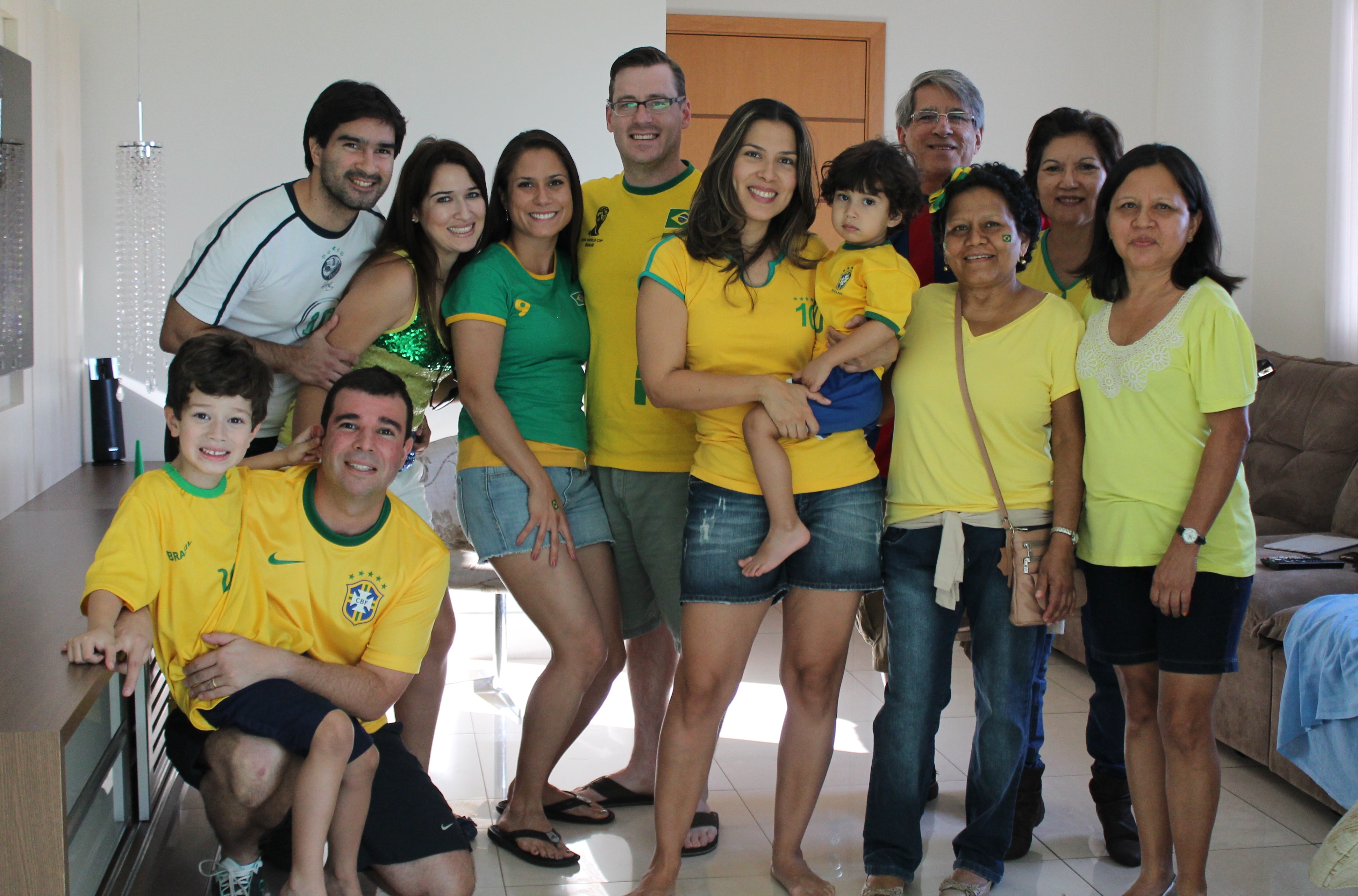
The Whole Family

The Whole Family

Pretty much all the events we attended in Belo Horizonte revolved around food, so here are some of the places we’ve been to and the things we ate. Everyday my mom, my aunt, and my parents’ maid would cook breakfast, lunch, and dinner for us. The highlight for me was pão de queijo (cheese bread), since it was homemade and warm. If there were any left from breakfast, we would also eat it as a snack with coffee in the afternoon. My mom’s maid also found out that palha italiana (a chocolate and cookies patty) was one of my favorite desserts and made that for my last day in Belo Horizonte. Since açai was one of the boyfriend’s favorite juices in the Amazon, my mom also defrosted the special pulp for him. Another thing that cannot be missed at my parents: bacalhau, the salted cod fish baked Portuguese style.

This slideshow requires JavaScript.

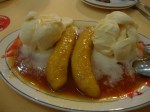
Some days it seemed all we did was eat, watch a World Cup game on television, eat again, watch another game, play with the dog Sucki, and eat again before going to bed. There was always a snack too, like banana frita (fried bananas), goiabada (guava candy), and ovo de pascoa (the huge chocolate Easter eggs they had been saving for me).

This slideshow requires JavaScript.

While we were there, we also had a couple of birthdays: my mom’s and my nephew’s. My mom’s was a low-key one at home, with chocolate cake. My nephew’s 6th birthday was a whole production with Batman decorations, huge cake, an entertainer and bouncy house for the kids, and, of course, salgadinhos (Brazilian appetizers, like croquettes and mini-quiches) and brigadeiros (chocolate-caramel little ball).

This slideshow requires JavaScript.

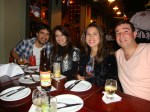
Of course, World Cup games were also an excuse to eat. For Brasil vs. Chile we went to my sister’s and had more salgadinhos and brigadeiros, along with other dishes brought by her neighbors, like hot dogs and lasagna. For one of the USA games we met my friend S. at Bar Itatiaia for some beer, and then for the Germany vs. Brasil I met her again, but at Bar do Carmo. During Brazil games, downtown streets were closed for people to watch the game on big screens. Very crowded, but I went there anyway to see my friend M. and his family.

This slideshow requires JavaScript.

Belo Horizonte, being a big city without a beach, has many malls as a pastime. I went many times to Pátio Savassi Mall since it is so close to my dad’s office. There I met my friend M., walked by our old high school that is nearby, and ate at Graciliano, one of my favorite places because they have an upscale all-you-can-eat buffet. Also, one of the only places I can find this almond cookie called “financier”.

This slideshow requires JavaScript.

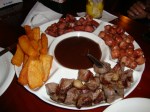
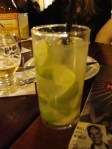
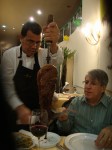
When you think of Brazilian food and drinks, you think of two things: caipirinha and churrasco. Caipirinha is a cachaça (Brazilian rum), sugar, and lime juice drink best found in “botecos” (bars), like the one we went to with my siblings: Armazém Medeiros. Now for the churrasco, we went to churrascaria Ambrosios, which is an all-you-can-eat Brazilian steakhouse/barbecue place. The servers bring each of the several cuts of meat on a big skewer to your table, one by one, for as long as you can eat them. All the side dishes are on a buffet, but the meat will be brought to you if you have a green coaster that says “go” near your plate. Are you hungry yet?


Traveling: Ouro Preto, Brazil

I’ve lost count how many times I’ve been to the mining town of Ouro Preto. In school, we always had a field trip there. The cobblestone streets and colonial style buildings are beautiful. Unfortunately, you have to pay to go inside the churches and see all the gold and beauty of the sculptures, but they are so full of baroque details and exceptional artwork from the 17th and 18th century, that it is worth it. Some of the carvings were made by Aleijadinho, who didn’t have hands and had to carve with his feet, mouth, or tools attached to his crippled hands. Ouro Preto is also known for its role during a failed revolution in 1789 (Inconfidencia Mineira), inspired by the American Revolutionary War.

This slideshow requires JavaScript.


Traveling: Inhotim, Brazil


This slideshow requires JavaScript.

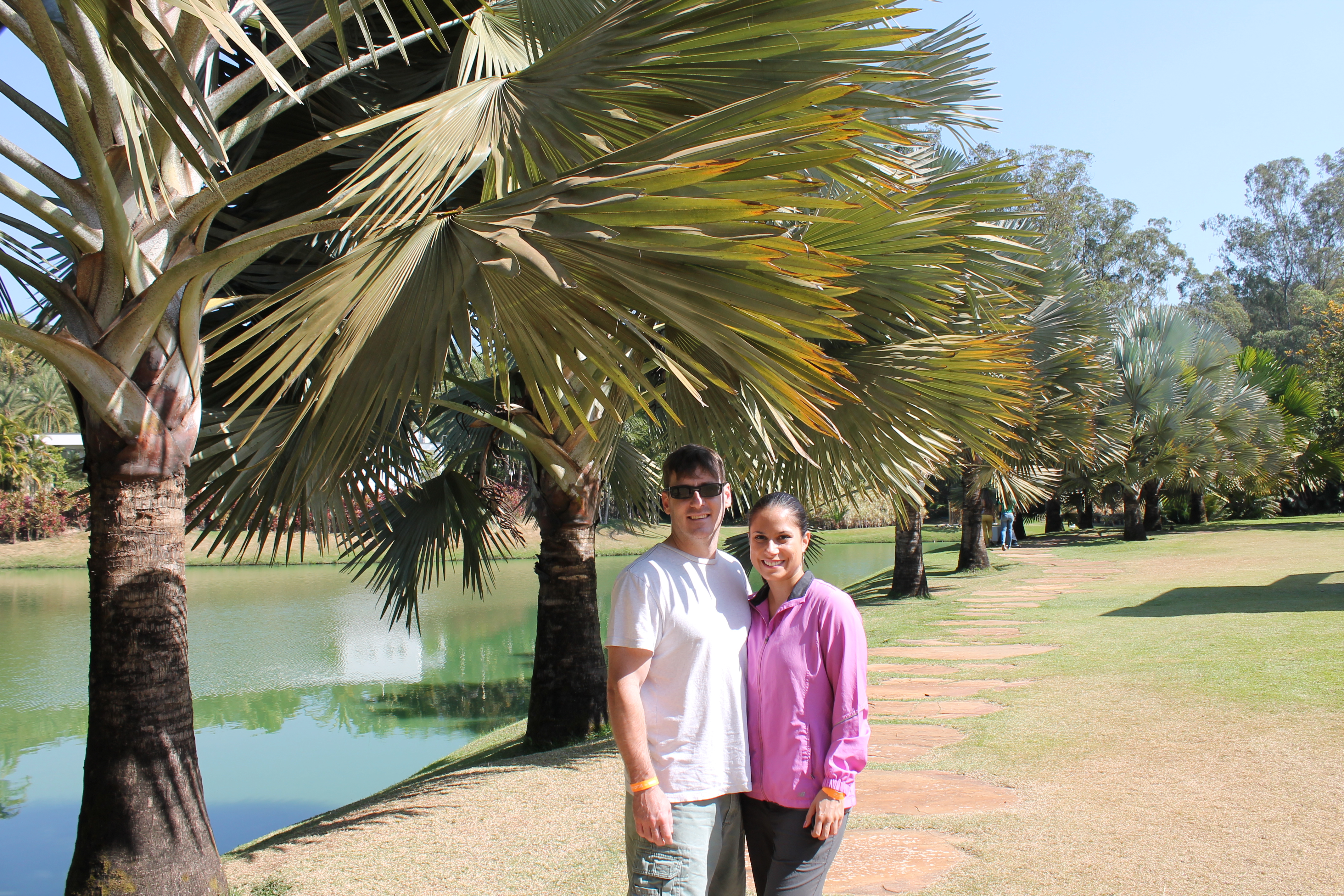
Outside of Belo Horizonte, in Brumadinho, is an open-air museum and botanical garden worth seeing. Strolling by trees and plants from all over the world, you follow trails that take you to several galleries filled with contemporary art, some way too modern for my taste though… Inhotim has beautiful lakes, sculptures, and restaurants as well.

Inhotim Gardens

Inhotim Gardens

Traveling: Belo Horizonte, Brazil

The trip to Belo Horizonte was mostly about being with family, but since it was the boyfriend’s first time there, we had to take him to all the touristy places.

Praça do Papa (Pope Square): A plaza where the pope celebrated mass in 1980, with views of the south end of Belo Horizonte.

Mirante do Mangabeiras (Overlook): the panoramic views from the top of Serra do Curral were one of my favorite things growing up. Now they renovated the area and there is a nice overlook with benches to watch the sunset.

Mercado Central (Central Market): this is a huge marketplace downtown, where you can buy meat, fruit, flowers, tea, cheese… There we saw the boyfriend’s new favorite fruit: cajú (cashew fruit) and tasted cachaça (Brazilian rum). Believe it or not, it was my first time there. I didn’t even know that it was covered and that they had a parking lot, just like in a mall.

This slideshow requires JavaScript.

Palacio das Artes (Arts Palace): this is a beautiful modern theater downtown, but when we went there, they were closed and all we were able to see was the arts and crafts store, which had lots of artwork from Minas artists.

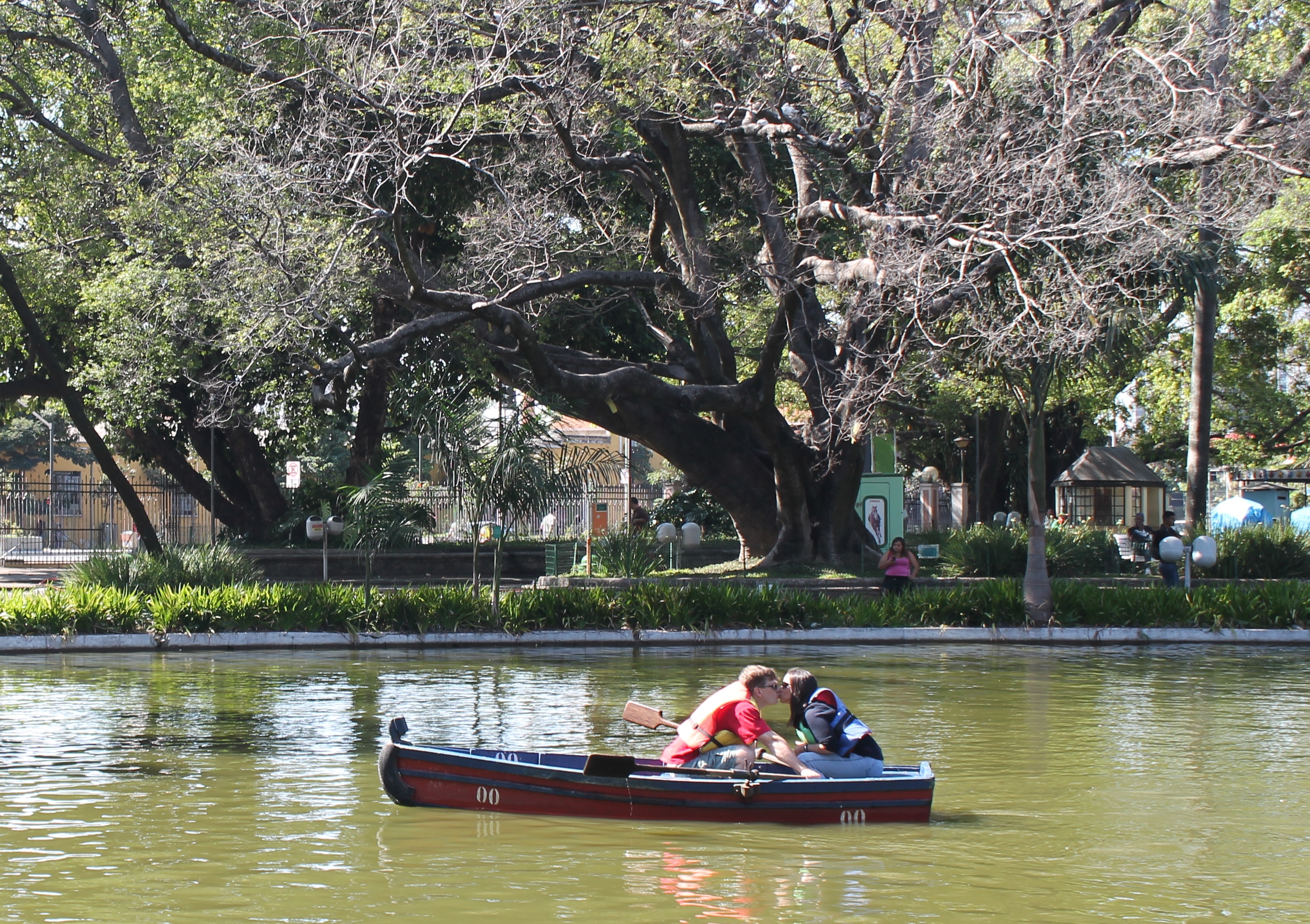
Parque Municipal (City Park): The “Central Park” of Belo Horizonte is actually beautiful, full of trees, a small amusement park, and a lake. The boyfriend and I went on a canoe ride while my mom took pictures of the lovebirds.

Parque Municipal - City Park

Parque Municipal – City Park

This slideshow requires JavaScript.

Igreja da Pampulha (Church): on the north part of town, this church is one of the most famous sites of Belo Horizonte because it was built by architect Oscar Niemeyer. Controversial at first, the church has an organic modern style and an altar mural by artist Candido Portinari.

This slideshow requires JavaScript.

Lagoa da Pampulha (Lagoon): this lake and its surroundings were also designed in the 40’s by Niemeyer. Now it’s a little polluted but the 18km trail around it is still nice.

Mineirão (Stadium): Belo Horizonte was one of the World Cup host cities. The infamous game Brazil vs. Germany, with Brazil’s epic loss of 7-1, was played here, so I’m not sure it is a very lucky place.


World Cup in Manaus, Amazon, Brazil

Man, did the press make a big deal about all the problems Brazil would have hosting the World Cup or what? I’m glad we didn’t listen and went anyway: the whole experience was perfect!

Brazil love

Brazil love

It was nice to be able to stay with my aunt, but it was even nicer that she lived right across from the hotel where the US players were staying. And it gets better: my cousin M. is the assistant manager of the hotel that hosted the Portugal team. So we got to see and hear (helicopters and police all over) when the US team went in and out of the hotel and then my cousin would bring us the latest on the Portuguese players: did you know Cristiano Ronaldo (2013 best soccer player of the year) likes to take a bath with white rose petals before a game?

This slideshow requires JavaScript.

On the day of the USA vs. Portugal game, we went in front of the hotel to wish the US players good luck. Although there were lots of curious eyes around, the boyfriend was the only American yelling “USA”. We got to see the goalie Tim Howard, the dreadlock hottie Beckerman, and the captain, Dempsey, who had broken his nose in the previous game.

This slideshow requires JavaScript.

My cousin A. dropped us off the closest he could get to the stadium (Arena Amazonia), which was still a couple miles away because of all of the closed off streets, but we didn’t mind walking: the energy was almost palpable. Getting into the stadium was super easy too: there were no lines and everything went very smoothly. So impressed with the organization!

This slideshow requires JavaScript.

The game was a good one. USA needed a win to automatically move on to the next phase, while a draw wouldn’t be too bad either. Portugal needed a draw or a win to be kept alive. A loss would mean they would go home automatically. Portugal scored first, although not with a goal by Cristiano Ronaldo, their most famous player. Then US scored two goals and we thought we were going to win, but on the last SECOND, Portugal scored another one… Actually, a score of 2-2 wasn’t too bad: both teams left happy and we left for an all-you-can-eat soup feast nearby.

This slideshow requires JavaScript.

The next day there was a Brazil game and we decided to be where all the action was: FIFA Fan Fest. In each host town, FIFA would close off an area for spectators to watch each game on several screens. In Manaus, this fest was in Ponta Negra, a nice area by the beach. Just to get in we had to stand in lines and go thru multiple security checkpoints. Once in, we notice how there were more than 40,000 people in the area, which was supposed to be the limit. There were probably double of the people there, the noise of the horns was deafening, and the heat was unbearable. We barely found a spot to watch the game. But it didn’t matter: the Amazon jungle was surrounding us and the experience of a lifetime in Brazil was already unforgettable.

This slideshow requires JavaScript.

Eating in Manaus, Amazon, Brazil

People always ask me how is the food in Brazil, and I always say it’s the same as in the U.S.: pasta, chicken, burgers, potatoes… But that’s because I grew up in the Southeast. In Manaus, we still had all of that, of course, but my aunt made sure we also tried all of the typical things from the Amazon and their diet consists of mainly three things: fish, fruit, and whatever they can make from the manioc root.

Family Lunch

Family Lunch

Pirarucu is the largest fish of the Amazon and one of the largest freshwater fish in the world, growing up to 10 ft. long. At our boat tour of the Amazon, we saw them being spearfished and my aunt prepared a baked one for us with lots of olive oil and herbs: delicious. On a different day, she cooked another fish, which was even more interesting. The ribs of the tambaqui are so big, we ate them with our hands, just like pork ribs.

This slideshow requires JavaScript.

To accompany every meal, there is always something made from manioc. Also known as cassava or yuca, this starchy root has many uses, but it needs to be prepared correctly or it can be toxic. If dried and made into small sized little pearls, it is called tapioca and can be eaten as a snack. Then from the flour, you can make different cakes, breads or a white crepe topped with fruits or maybe just butter. Toasted manioc flour is called farofa and served as a crunchy side dish. You can also fry it and eat it like French fries, and make into a broth for tacacá, a soup with shrimp. There are so many more dishes made from manioc, that potatoes take a secondary role as a starch in the Brazilian Amazon (but certainly not in its native Peru).

This slideshow requires JavaScript.

Fresh fruit markets are everywhere in Brazil, including on the side of the road, like the one we went to on our way to Café Regional (typical brunch place). We saw lots of fruits, including tucumã (a small orange fruit from a palm tree) and cacao (yup, the fruit they make chocolate from). At Café Regional we tried tapioquinha with tucumã, two different kinds of manioc cake, and fruit juices, like passion fruit, and cupuacu, which ended up being the boyfriend’s favorite fruit in Brazil. The fruit itself is not very edible, but the white pulp is made into juice, jelly, mousse, candy… It is considered a superfruit, much like another Amazonian fruit that is more popular in the US: acai. This one is a berry and the most common use is for juices and smoothies eaten with granola, bananas, and condensed milk. Good news: Whole Foods sell frozen acai juice in the US.

This slideshow requires JavaScript.

Traveling in Manaus, Amazon, Brazil

Growing up my parents took us to lots of different places around the world, but not to the Amazon, which is baffling considering they met at the capital city of Manaus, and I still have many aunts and cousins living there. So when the boyfriend and I found out we had been able to get World Cup tickets for a game in Manaus, I was beyond excited! Sure, a game in Brasilia or Rio de Janeiro would be fun too, but Southeast Brazil is not a vacation spot for me. It is where I grew up, so it’s too familiar. However, going to the Amazon, now we’re talking about a cool vacation!

Amazon River

Amazon River

We stayed with my aunt D. and her son, A., who speaks English since he had lived in Nebraska during high school. His good experience in the US was certainly a part of why my parents allowed me to move here. As with any typical Brazilian family, their hospitality was fantastic. Their long-time maid cooked us huge meals every day with all the typical fish and fruit from the region, and they showed us lots of interesting places.

This slideshow requires JavaScript.

With D., we went to Largo de São Sebastião, a cultural and historical area, with a plaza full of screens for the World Cup broadcasts. In front, it is the Teatro Amazonas, or Amazon Opera House. Built in the 1880’s, with all the money from the rubber boom, it still houses many concerts and plays throughout the year. One night, we went to a show called “Estrelas do Amazonas” (“Amazon Stars”), where famous Amazon artists sang music related to Brazil and soccer, in honor of the World Cup.

This slideshow requires JavaScript.

The next day, A. and his wife J. took us on a walking tour of the historical downtown. We saw local modern artwork at the Paço da Liberdade, an old city hall now converted into a cultural center and with beautiful views of Manaus. We strolled through the old cobblestone streets to see some of the renovated historical houses, and then made our way to the port area, which was crowded with street vendors. Nearby it was the Adolpho Lisboa Central Market, with arts and crafts, tea bags from every herb and plant found in the Amazon, and fresh fish. The sights and sounds were at times overwhelming (but not so much as India), so I’m glad we were there with our cousins who knew what they were doing.

This slideshow requires JavaScript.

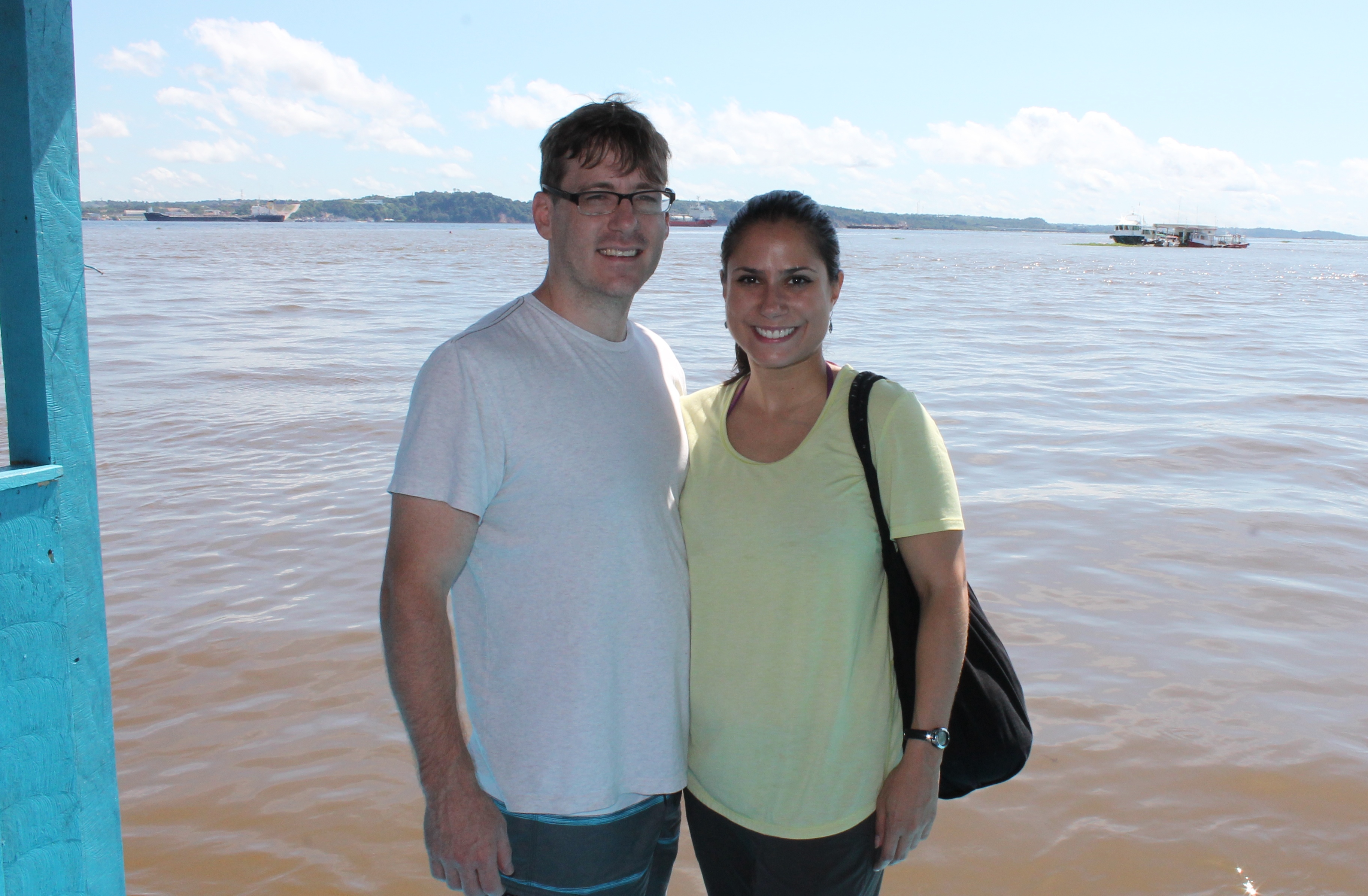
On one of the days in Manaus, which is a big city in the heart of the rainforest, we booked a boat tour to see some faraway places on the river. The small motor boat was supposed to have a tour guide besides the captain, but because of the World Cup, Manaus received almost 100,000 tourists in two weeks and guides were not available for every tour. Good thing I speak Portuguese and was able to chat a bit with the boat captain. From the port of Manaus, we went up the Rio Negro until it met the Amazon River, which in this area is called Rio Solimões. The Amazon River is the largest in the world by water discharge and when it meets Rio Negro, the waters, of different density and speed, don’t mix for miles. The Encontro das Aguas (Meeting of Waters) is a beautiful natural phenomenon, with black water on one side and brown water on the other.

This slideshow requires JavaScript.

On this boat tour, we stopped at many floating houses. In one of them we saw how the largest Amazon fish was caught, on another one we had a huge buffet lunch with all you can eat fish and fruit, and one a third floating house we had contact with several wild animals: monkeys, alligators, snakes, and the cutest sloth ever.

This slideshow requires JavaScript.

The small boat was able to go to the Igapós, which are flooded parts of the forests. Besides observing how people lived (they have floating schools, houses, churches…), we also saw one of the largest trees in the Amazon (Sumaúma or Ceiba), and giant water lilies, with leaves up to 3 meters in diameter.

This slideshow requires JavaScript.

In the afternoon, after a 1-hour ride, we arrived at Novo Airão to swim with the legendary pink river dolphins. We waited a long time since there were too many tourists around, but when a big boat full of Portuguese people left, the dolphins came to see us. They have really long noses and are truly pink. The natives believe that if a female swims with a pink dolphin at night, she becomes pregnant.

This slideshow requires JavaScript.

Speaking of natives, our last stop was at an Amazon tribe. We saw their thatched roof houses and a dance performance, which I got to participate in. The boyfriend was a little uncomfortable since they were in their native attire (naked from the waist-up) and because of the loads of tourists there for the World Cup, but all and all it was a great experience to have. The village was on top of a hill with a beautiful, peaceful view of the Amazon River. An unbelievable experience, especially considering there were no mosquitoes in sight and no one got sick! Definitely one of the coolest vacations ever and I can’t wait to go back (well, the boyfriend would even consider moving there).

This slideshow requires JavaScript.

Traveling: New York City with my students

Statue of Liberty

Statue of Liberty

We definitely felt we would never sleep again while in New York City. While Washington had a lot more history to take in, NYC was filled with shopping and fun. We covered all of the must-sees: Times Square (and the huge candy bars at Hershey’s), Statue of Liberty, Empire State Building (even more beautiful views at night), Central Park (where we bought hot-dogs, pretzels, and pizza), 9/11 Memorial, Wall Street, but we also squeezed in a subway ride and a trip to Chinatown. Since my students love theater, favorites included the Broadway show “Jersey Boys” and a tour of Radio City Music Hall (they had had the Tony Awards there the night before!) where we got to meet a Rockette.


This slideshow requires JavaScript.

At the end of the trip, I was so proud of my students! Not everyone can travel like this, always on the move. For 5 days, they had slept only 4 hours each night, and, although there were some bumps (girl drama… blisters…), we all survived and arrived back in Reno with more experiences and cool things to share than we ever thought possible. Not sure if I would want to do this trip with them every year though. It’s been a month and I’m still exhausted!

Traveling: Washington, D.C., with my students

For years I have been trying to share my love of travels with my students not only though stories and pictures, but by trying to set up international or domestic school trips. Unfortunately the school where I work has mostly low-income families and even the money for the deposit would be hard to come by. This year, one of the companies I had been working with waived the minimum number of students and I took four of them to Washington, D.C., and New York City for a very fast-paced tour.

Washington Monument

Washington Monument

It all started at the Reno airport at 4 am, and after a few hours of flying we met our tour guide and a group of 20 middle and high school students from Houston, Texas, who would be joining us for the next 5 days. We went straight to the Air and Space Museum, which proved to be far too big for only 1 hour, but I enjoyed seeing all the old planes again, especially because I had been reading about the start of aviation on Bill Bryson’s book “One summer: America, 1927”.

Then off to several memorials, including two that became my new favorites: the Korean War Veterans and the Martin Luther King Jr. ones.

This slideshow requires JavaScript.

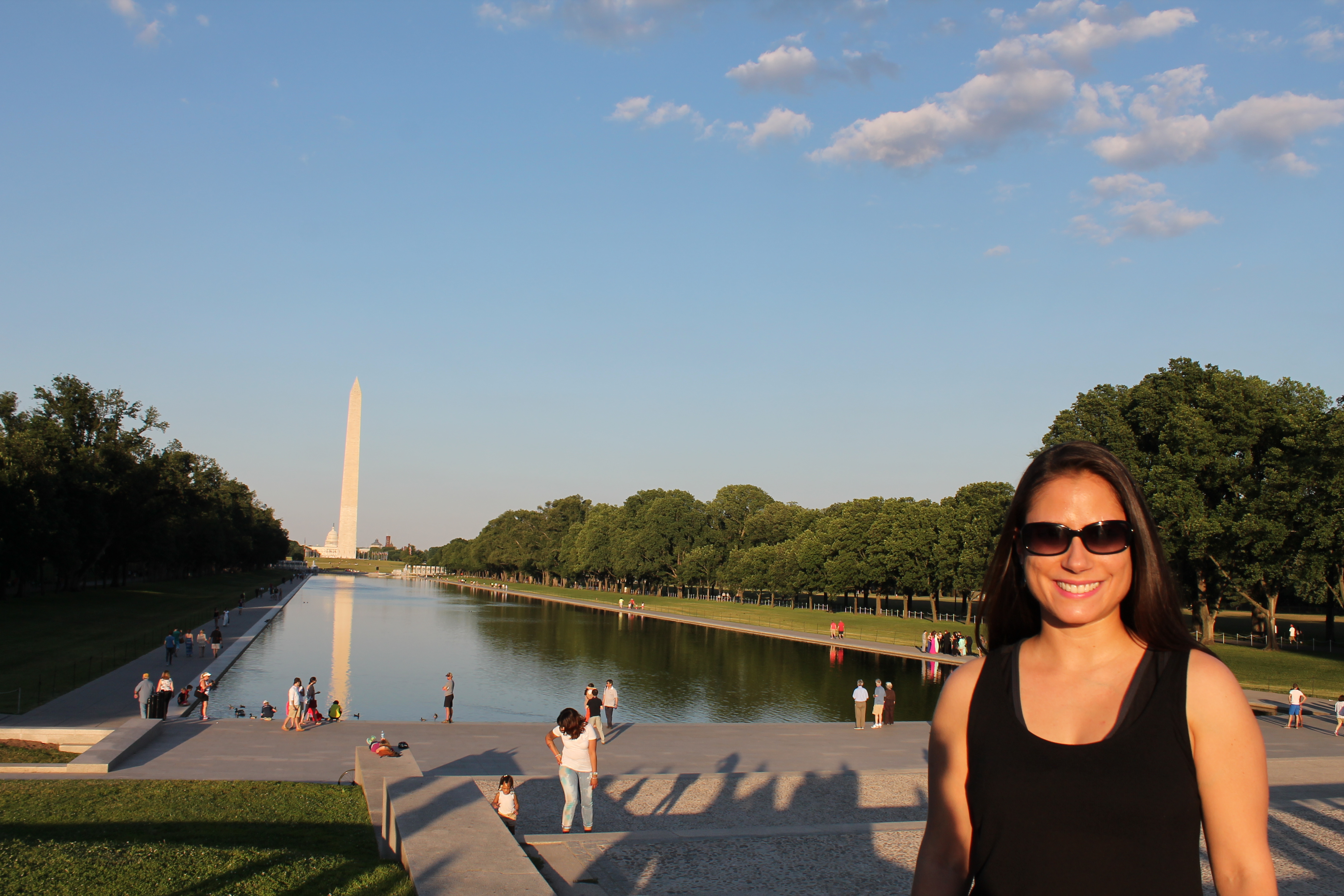
The next day we had more memorials (“I had no idea the reflection pool was real!”, said one student) and more museums (the Natural History one was the students’ favorite) in the schedule, but the highlight was the change of guards at the Tomb of the Unknowns at Arlington National Cemetery. We had such a full day that by the time we made it to Embassy Row, I think everybody was asleep.

This slideshow requires JavaScript.

We also had a tour of Mount Vernon (George Washington’s home) and the U.S. Capitol building, with its many statues and paintings. So much walking made the students really tired (mentally and physically), but it was well worth it.

This slideshow requires JavaScript.

Traveling (and Eating): San Antonio, Texas

After our Easter brunch with my goddaughter E., the boyfriend and I went to San Antonio, a town 3 hours away from Houston. At first I was not impressed. With a large population and run-down buildings, the city didn’t seem as modern as Houston and I wasn’t sure it would have much to offer. That’s until we went down a flight of stairs to get to the River Walk. The downtown area has a river that meanders thru it, right below the surface streets. Alongside there are cute cafes and river boats giving a Venice like ambiance to the area. Unfortunately, the day we were there they were setting up for a river parade, so parts of the river sidewalk were closed, but we still got a chance to sit down and enjoy some fudge by the river.

This slideshow requires JavaScript.

Another attraction in San Antonio is The Alamo, famous for a 13-day siege during the Texas Revolution in 1836. Now the site is a shrine with some information about the battle and a pretty garden. Best of all, it’s free, quick, and easy to explore.

This slideshow requires JavaScript.

A mile or so from the river walk is Market Square and lots of authentic Mexican food and goodies. It was filled with music and fun and on our way there we also stopped at San Fernando Church (1738), one of the oldest cathedrals of the United States and where the remains of Davy Crockett are located.

This slideshow requires JavaScript.

As for food, we went to a great Cuban restaurant by the river called “Ocho” at the Havana Hotel. The food was awesome (pozole, Cubano sandwich, mojitos, yum!), but service not so great – they didn’t want me to take any pictures inside! We had to talk to the manager to get it approved. A good find in San Antonio was the fried potato salad from Moses Rose’s Hideout: a cross between potato salad, French fries, and baked potato that could give you a heart attack on the spot.

This slideshow requires JavaScript.